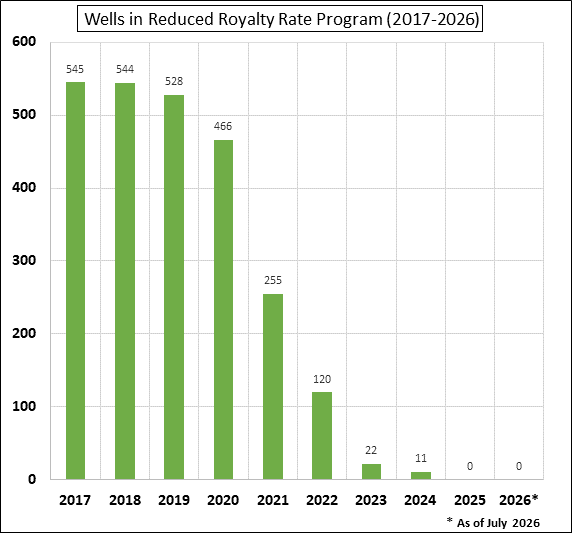
SANTA FE, N.M. – New Mexico Land Commissioner Stephanie Garcia Richard announced today that there are now zero wells participating in a program created by state law in 1994 that subsidized low-producing but high-emitting oil and gas wells – also known in the industry as “Stripper Wells.” Through a comprehensive vetting process, the number of wells in the program has been reduced from about 530 when Commissioner Garcia Richard assumed office in 2019 to zero today. Commissioner Garcia Richard is also calling on the New Mexico Legislature to formally end the program for good.
“The Legislature may have had good intentions when they created this law, but the result has been that New Mexico’s school kids are subsidizing the oil and gas industry. Our school kids should never be on the hook for this industry’s activities and we shouldn’t be pushing the problem of dealing with old wells to future generations,” said Commissioner Garcia Richard. “New Mexico has long had a significant abandoned well problem, and my administration has made tremendous progress in addressing the issue, obtaining the plugging of 895 abandoned oil and gas wells at no cost to taxpayers. The bottom line is we need to stop subsidizing and incentivizing companies to keep risky wells alive. Once again, I urge lawmakers to formally end this corporate welfare program for the oil and gas industry.”
The Royalty Rate Reduction Program (RRRP) has primarily served as a handout to oil and gas operators of all sizes at the expense of the public schools, universities, and hospitals funded by the New Mexico State Land Office (NMSLO), resulting in the loss of millions in potential revenue. The original intent of the program was to keep old, teetering wells alive and producing longer by giving companies a break on how much they pay in royalties. However, the history of the program has demonstrated that it has subjected New Mexico taxpayers to unnecessary environmental and financial risk, allowing marginal wells to continue producing with no financial benefit to the state.
The NMSLO has submitted annual reports to the New Mexico Legislature and Governor during Commissioner Garcia Richard’s tenure indicating that the program does not make financial sense and calling for it to be repealed, most recently in December 2025. The NMSLO has also applied greater scrutiny to applications to the RRRP, resulting in the reduction to zero wells participating in the program today.
Commissioner of Public Lands Stephanie Garcia Richard has overseen the New Mexico State Land Office since 2019. In that time the agency has earned over $15 billion for New Mexico public schools, hospitals, and universities. Over 13 million acres of state trust land are leased for a variety of uses, including ranching and farming, renewable energy, business development, mineral development, and outdoor recreation. The State Land Office has a dual mandate to use state trust land to financially support vital public institutions, while simultaneously working to protect the land for future generations.