SANTA FE, N.M. – New Mexico Land Commissioner Stephanie Garcia Richard announced that the State Land Office (NMSLO) has finalized a new bonding rule for oil and gas leasing on state trust lands. The new rule updates financial assurance levels for the first time in more than 40 years to better protect the public from shouldering liabilities caused by oil and gas companies on state land, such as plugging abandoned wells and cleaning up contamination from oil and wastewater spills.
The rulemaking process included extensive written comments and a public hearing on May 27 and 28. The rule takes effect on September 28, 2026, though companies have additional time to come into compliance with many aspects of the rule.
“It has been close to half a century since the bonding rule for oil and gas development on state lands has been updated, exposing all New Mexicans to unnecessary financial risk. That ends now,” said Commissioner Garcia Richard. “The bottom line is New Mexicans should never have to foot the bill to clean up messes on state lands. This new rule puts much stronger financial assurances in place in the event there are unaddressed spills or a company goes belly-up and is unable to plug its wells. Given that this last year marked the highest level of oil production ever on state lands, we need to ensure that these activities don’t end up costing us in the long-run.”
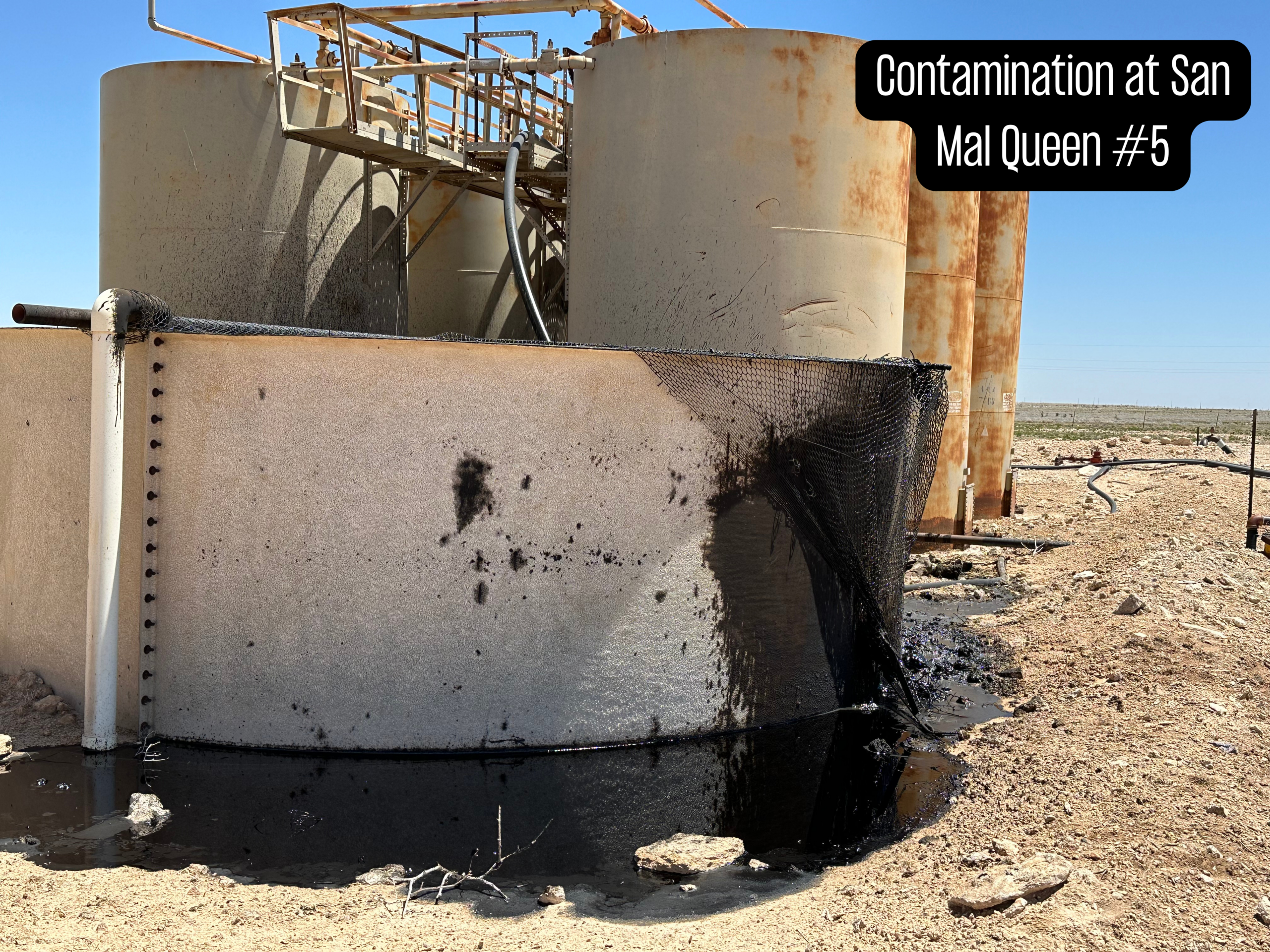
The new rule will ensure there is a responsible party to pay for damage to state lands. Previously, NMSLO has been forced to take legal action in instances where financial assurances do not come close to covering cleanup costs. In one recent case (pictured below), NMSLO was awarded a nearly $7.5 million judgement from negligent oil and gas operator Smith & Marrs and the related lessee for damage to state lands. Because the companies are defunct and have few if any assets, New Mexico public schoolkids were left to bear the cost of cleanup. The company’s bond on file covered less than 1% of the total estimated bill.
Under NMSLO’s woefully inadequate prior rule, oil and gas companies could post a minimal bond (anywhere from $10,000-$25,000) to cover hundreds of wells and in some cases, hundreds of acres. These nominal bonds provided no real protection for damage to state lands since plugging even a single abandoned well with no other remediation activities can cost over $100,000 by conservative estimates.
For nearly 6,000 oil and gas leases with many thousands of wells located on them, NMSLO held only about $15 million in bonds – but plugging and cleanup costs for those same leases are estimated to be billions of dollars. A 2021 study by the Center for Applied Research concluded the state is facing a shortfall of several billion dollars needed to fully remediate all state lands leased for oil and gas production. A more recent report by the New Mexico Legislative Finance Committee estimated the state’s liability for well-plugging and remediation to be up to $1.6 billion.
The new rule addresses these shortfalls by raising the minimum bond to $150,000 for oil and gas leases and increases amounts based on risk for companies with documented compliance problems, such as repeated or unaddressed spills, inactive and extremely marginal wells, and a track record of lawsuits or regulatory violations. These and other changes will provide New Mexicans with better protection against damage to state lands by ensuring that a greater share of cleanup costs are borne by the responsible parties – oil and gas corporations.
Additionally, in the face of threats of litigation from the oil and gas industry to challenge the Commissioner’s authority to promulgate the new rule or even the prior rule (with minimal $10,000 bonds), the NMSLO has filed a lawsuit seeking declaratory judgement in District Court that New Mexico law clearly gives the agency the authority to protect state lands by requiring financial assurance.
“We will not be intimidated by threats from oil and gas corporations to challenge my statutory and constitutional authority to do my job on behalf of New Mexicans,” added Commissioner Garcia Richard. “Raising financial assurances for oil and gas development is deeply rooted in New Mexico law. Moreover, it’s the right thing to do.
Under Commissioner Garcia Richard’s leadership, the State Land Office has undertaken significant efforts to address environmental damage on state lands, including establishing the Accountability and Enforcement Program in 2020 and creating the Environmental Compliance Office in 2022. Through these and other efforts, NMSLO has filed over 40 lawsuits and obtained the plugging of more than 940 inactive wells to date, at an estimated cost savings upwards of $235 million, the cleanup of a significant number of spills, and the establishment – for the first time in the agency’s history – of meaningful and enforceable expectations that lessees must fully restore the state-owned land they use for oil and gas production.
More information, including the full text of the rule, is available for download at: https://www.nmstatelands.org/bonding.
New Mexico Land Commissioner Stephanie Garcia Richard has overseen the New Mexico State Land Office since 2019. In that time the agency has earned more than $16 billion for New Mexico public schools, hospitals, and universities. Over 13 million acres of state trust land are leased for a variety of uses, including ranching and farming, renewable energy, business development, mineral development, and outdoor recreation. The State Land Office has a dual mandate to use state trust land to financially support vital public institutions, while simultaneously working to protect the land for future generations.